
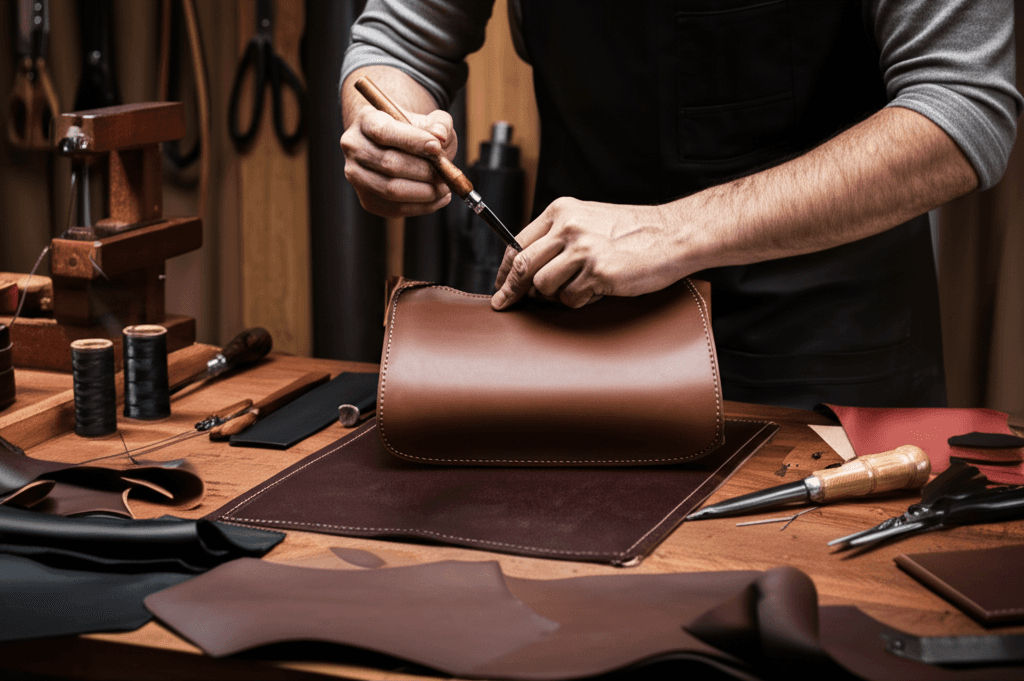
Lebanese Artisan Leather Heritage: Centuries of Craftsmanship & Tradition
Lebanon's Leather Craftsmanship Legacy
For centuries, Lebanese artisans have crafted exceptional leather goods, blending traditional Mediterranean techniques with distinctive Lebanese artistry. From ancient Phoenician traders to modern master craftsmen, leather working remains integral to Lebanese cultural heritage and economic identity.
Historical Roots: Phoenician to Ottoman
Phoenician Era (1500-300 BCE)
Ancient Phoenicians, Lebanon's ancestors, were renowned traders who valued quality leather goods. Maritime trade required durable leather for ship rigging, clothing, and cargo protection. Phoenician leather workers developed advanced tanning and finishing techniques that influenced Mediterranean leather craft for centuries.
Roman and Byzantine Periods
Under Roman and Byzantine rule, Lebanese cities (ancient Berytus/Beirut, Byblos, Tyre, Sidon) maintained thriving leather industries. Craftsmen supplied leather for Roman military (sandals, armor straps, shields), creating demand for skilled Lebanese leather workers.
Ottoman Era (1516-1918)
During Ottoman period, Lebanese leather craft flourished in traditional souks. Tripoli, Beirut, and Sidon developed distinct leather working specialties:
- Tripoli: Known for fine leather slippers, sandals, traditional bags
- Beirut: Specialized in saddles, harnesses, military leather goods
- Sidon: Produced leather containers, water carriers, storage vessels
Traditional Lebanese Leather Techniques
Vegetable Tanning
Lebanese artisans traditionally used vegetable tanning with local materials:
- Oak bark from Lebanese mountains
- Sumac leaves (abundant in Lebanon)
- Olive leaves and fruit
- Cedar bark (from famous Lebanese cedars)
This process took 6-8 weeks but produced environmentally friendly, durable leather with beautiful aging characteristics.
Natural Dyeing
Traditional colors came from natural Lebanese sources:
- Black: Oak galls, iron compounds
- Brown: Walnut husks, oak bark
- Red: Madder root, pomegranate rind
- Yellow: Saffron, turmeric
Hand-Stitching
Master Lebanese craftsmen used traditional saddle-stitch technique:
- Two needles, waxed linen thread
- Each stitch locked by opposite needle
- Creates strongest possible seam
- Lasts longer than machine stitching
- Allows repair without full seam failure
Edge Finishing
Lebanese edge finishing technique (still used today):
- Edges cut precisely with sharp knife
- Sanded smooth with progressively finer grits
- Burnished with wood or bone tool
- Waxed for water resistance and shine
- Creates sealed, polished edge
The Souk Tradition
Traditional Lebanese Leather Souks
Organization: Leather workers traditionally clustered in specific souk areas
Specialization: Different shops specialized in specific products:
- Shoe makers (khayyāt)
- Bag craftsmen
- Saddle and harness makers
- Belt and strap specialists
Apprenticeship System: Skills passed through generations:
- Boys began apprenticeship age 12-14
- Learned basics for 2-3 years
- Advanced techniques for 3-5 more years
- Became master craftsmen by late 20s
- Often inherited family businesses
Tripoli's Leather Souk
Tripoli maintained one of Lebanon's most famous leather souks:
- Located in old city's commercial district
- Specialized in traditional babouche slippers
- Known for intricate hand-tooling patterns
- Many shops operating 100+ years
- Continues tradition today (though diminished)
20th Century: Modernization and Challenges
Early 1900s: Peak Production
Early 20th century saw Lebanese leather craft at peak:
- Hundreds of small workshops
- Export to regional markets
- Integration of some modern tools
- Maintained traditional quality standards
Mid-Century: Industrialization Pressures
1950s-1970s brought challenges:
- Imported mass-produced goods
- Younger generation pursuing other careers
- Rising costs of quality materials
- Economic pressures favoring quantity over quality
Civil War Era (1975-1990)
Lebanese civil war devastated traditional crafts:
- Many workshops destroyed
- Artisans fled or changed professions
- Supply chains disrupted
- Loss of generational knowledge
Post-War Revival (1990s-Present)
Since 1990s, renewed appreciation for traditional crafts:
- Cultural heritage preservation efforts
- Growing market for handmade quality
- Tourism interest in authentic Lebanese products
- New generation learning traditional skills
The Manufact Story
Foundation and Vision
Manufact founded in 1990s in Koūša, North Governorate, during Lebanon's post-war reconstruction. Founders recognized opportunity to preserve traditional Lebanese leather craftsmanship while meeting modern needs.
Philosophy
Preserving tradition: Using time-honored hand-crafting techniques
Modern design: Creating pieces suited to contemporary Lebanese life
Quality obsession: Using only premium full-grain and top-grain leather
Local commitment: Supporting Lebanese artisans and economy
Craftsmanship Approach
Manufact combines:
- Traditional hand-cutting and hand-stitching
- Modern tools for precision
- Master craftsmen with 20-30+ years experience
- Apprenticeship program training next generation
- Quality control ensuring every piece meets standards
Materials
Manufact sources premium leather from:
- Responsible suppliers meeting quality standards
- Full-grain leather (highest quality)
- Top-grain leather (excellent quality)
- Vegetable-tanned options (eco-friendly)
- Tested for Lebanese climate durability
Products
Manufact handcrafts:
- Leather bags (totes, crossbody, satchels, briefcases)
- Premium footwear (boots, dress shoes, casual shoes)
- Leather accessories (belts, wallets, portfolios)
- Custom and bespoke pieces
Cultural Significance of Lebanese Leather
Symbol of Quality
In Lebanese culture, leather goods signify:
- Quality and discernment
- Respect for tradition
- Economic success
- Appreciation for craftsmanship
Gift-Giving Tradition
Leather gifts hold special meaning in Lebanese culture:
- 3rd anniversary gift (leather)
- Professional milestone gifts
- Wedding gifts (especially for groomsmen)
- Graduation presents
Professional Identity
Leather accessories (briefcases, bags, shoes) integral to Lebanese professional identity. Quality leather signals success, seriousness, and cultural awareness.
Contemporary Lebanese Leather Scene
Challenges
- Economic difficulties affecting purchasing power
- Competition from cheap imports
- Younger generation leaving traditional crafts
- High cost of quality raw materials
- Difficulty competing on price
Opportunities
- Growing appreciation for handmade quality
- Sustainability concerns favoring durable goods
- Lebanese diaspora seeking connection to heritage
- Tourism interest in authentic crafts
- Digital platforms enabling direct sales
Future of Lebanese Leather Craft
Preservation efforts:
- Cultural heritage organizations documenting techniques
- Government support for traditional crafts
- Educational programs teaching leather working
- International recognition of Lebanese quality
Innovation:
- Blending traditional techniques with contemporary design
- Sustainable practices and eco-friendly tanning
- Technology for precision while maintaining hand-craft
- Global marketing of Lebanese craftsmanship
Visiting Lebanese Leather Heritage
Manufact Workshop Tours
Experience Lebanese leather heritage at Manufact Boutique:
- See artisans at work
- Learn about traditional techniques
- Understand quality differences
- Discuss custom projects
- Connect with Lebanese craftsmanship tradition
Location: Al-Arz Highway Koura Plaza, Koūša, North Governorate
Tripoli Old Souk
Visit historic leather souk:
- Traditional workshops still operating
- See babouche slipper making
- Historic architecture
- Authentic Lebanese leather experience
Conclusion
Lebanese leather craftsmanship represents centuries of tradition, skill, and cultural identity. From ancient Phoenician traders to modern master artisans like Manufact, Lebanese leather workers maintain excellence while adapting to contemporary needs. Supporting Lebanese artisan leather preserves this heritage, ensures exceptional quality, and strengthens local communities. Visit Manufact at Al-Arz Highway Koura Plaza, Koūša to experience this living tradition and invest in pieces connecting you to centuries of Lebanese craftsmanship.
--- ## Related Articles ### Top Lebanese Leather Artisans 2025: Supporting Local Craftsmanship **Highly Related** • Lebanese Heritage Discover Lebanon's finest leather artisans and handmade leather brands. Support local craftsmanship, traditional techniques, and quality Lebanese leat... [Read More →](/blog/top-lebanese-leather-artisans-supporting-local) ### Metallic Leather Accessories Lebanon 2025: Gold & Silver Complete Guide **Related Topic** • Style Guides Discover metallic leather accessories at Manufact Lebanon. Complete guide to prata (silver) and ouro (gold) leather goods. Styling tips for Lebanese f... [Read More →](/blog/metallic-leather-accessories-lebanon-gold-silver-guide) ### Professional Women's Leather Bags Beirut: Complete Corporate Guide 2025 **Related Topic** • Professional Guides Essential guide to professional leather bags for Lebanese businesswomen. Discover the best work bags, totes, and briefcases for Beirut corporate life.... [Read More →](/blog/professional-womens-leather-bags-beirut-corporate) ### Men's Leather Boot Styles Lebanon 2025: Complete Fashion Guide **Related Topic** • Men's Fashion Discover the best men's leather boot styles for Lebanon. Chelsea boots, chukka boots, dress boots, and casual boots guide for Lebanese men's fashion 2... [Read More →](/blog/mens-leather-boot-styles-lebanon-complete-guide) ### Leather Wedding Accessories Lebanon: Complete Wedding Season Guide 2025 **Related Topic** • Wedding Guides Essential guide to leather wedding accessories for Lebanese brides and grooms. Discover premium leather shoes, bags, belts, and gifts for your Lebanes... [Read More →](/blog/leather-wedding-accessories-lebanese-wedding-guide) ### Best Leather Briefcases for Lebanese Professionals 2025: Executive Buying Guide **Related Topic** • Professional Guides Discover the top leather briefcases for Beirut professionals. Expert guide to choosing premium briefcases for Lebanese business, law, banking, and cor... [Read More →](/blog/best-leather-briefcases-lebanese-professionals)Tagged In
Enjoyed this article?
Visit our boutique at Al-Arz Highway Koura Plaza, Koūsha, Lebanon to experience our handcrafted leather collection in person.
Related Articles
Top Lebanese Leather Artisans 2025: Supporting Local Craftsmanship
Discover Lebanon's finest leather artisans and handmade leather brands. Support local craftsmanship, traditional techniques, and quality Lebanese leather goods.
أفضل حرفيي الجلود اللبنانيين 2025: دعم الحرفية المحلية
اكتشف أفضل حرفيي الجلود اللبنانيين ولماذا دعم الحرفية المحلية مهم. استكشف تقاليد صناعة الجلود اللبنانية الغنية.